
The New Era of Golf Simulators: What’s Actually Changed (and Why It Matters)
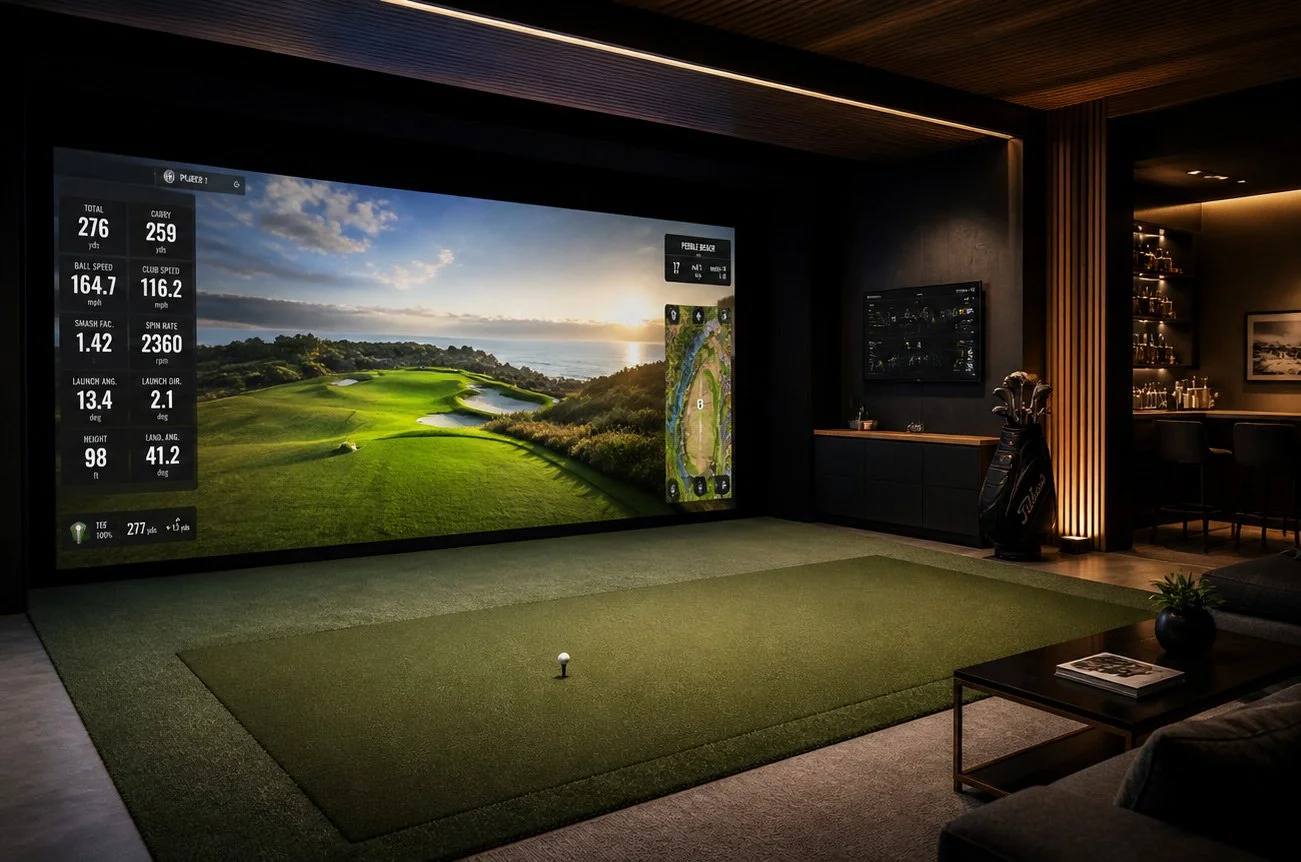
For years, golf simulators were seen as a novelty—fun, but ultimately a compromise. The visuals felt artificial, the ball data was questionable, and serious players still relied on the course or the range for real improvement.
That era is over.
Today’s golf simulator technology has crossed a threshold. What was once a “nice-to-have” is now a legitimate performance tool, entertainment centerpiece, and architectural feature in the modern home. But not all simulators are created equal—and understanding what’s actually changed is key to building a system that delivers.
Launch Monitor Technology Has Become Tour-Caliber
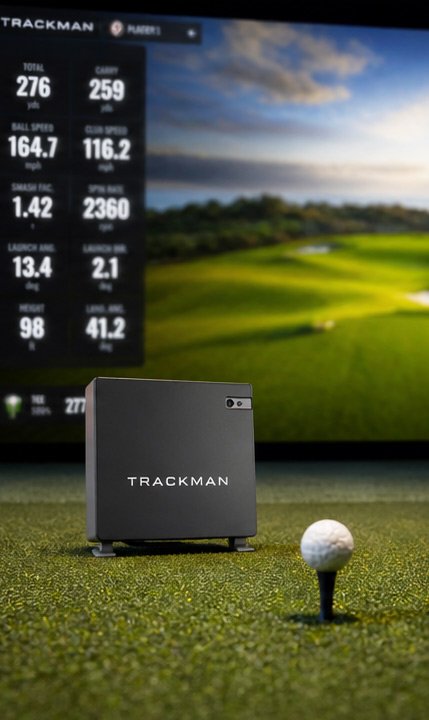
At the heart of every great simulator is the launch monitor—and this is where the most significant advancements have occurred.
Modern systems from companies like TrackMan, Foresight Sports, and FlightScope now measure club and ball data with extraordinary precision. We’re talking:
Spin rates within a few RPM
Club path and face angle tracking
Real-time ball flight modeling
These are the same technologies used by tour professionals and elite instructors. The result? You’re no longer guessing—you’re practicing with data you can trust.
Software Has Caught Up to Reality
The visual side of simulators has made a massive leap forward.
Platforms like GSPro and E6 Connect deliver:
Photorealistic courses with dynamic lighting
Highly accurate green speeds and ball roll physics
Online play and competitive modes
But the real breakthrough isn’t just how it looks—it’s how it behaves. Miss-hit a shot, and you’ll see it immediately. Pure a drive, and it feels right. That realism is what keeps serious golfers engaged.
True-to-Life Feel Comes From Proper System Design
Here’s where most people get it wrong: they think a simulator is just a screen and a mat.
In reality, performance depends heavily on how the system is designed and installed.
A high-end simulator integrates:
Commercial-grade impact screens that absorb energy correctly
Hitting surfaces that replicate turf interaction
Precision projector alignment for distortion-free visuals
Controlled lighting environments to maintain contrast and accuracy
This is where experience matters. A poorly designed room can undermine even the best technology, while a properly engineered space elevates everything.
Seamless Integration Into the Modern Home
The biggest shift might not be technical—it’s architectural.
Today’s simulators aren’t being tucked into basements as an afterthought. They’re being designed as:
Statement rooms
Multi-use entertainment spaces
Extensions of luxury living environments
With clean design, hidden tech, and integrated audio/visual systems, a simulator room can feel just as refined as a home theater or high-end lounge.
This is where EOC’s 25+ years in luxury home technology becomes a real advantage—because the goal isn’t just performance. It’s creating a space that belongs in your home.
It’s Not Just About Practice Anymore
Yes, today’s simulators will absolutely make you a better golfer.
But they’ve also become:
A place to entertain friends and clients
A year-round golf solution in Chicago’s climate
A family-friendly experience that gets used far more than expected
When done right, a simulator becomes one of the most used—and most valuable—rooms in the house.
The Bottom Line
Golf simulator technology has matured. Dramatically.
But the difference between a good experience and an exceptional one doesn’t come down to a single piece of equipment—it comes down to how everything is brought together.